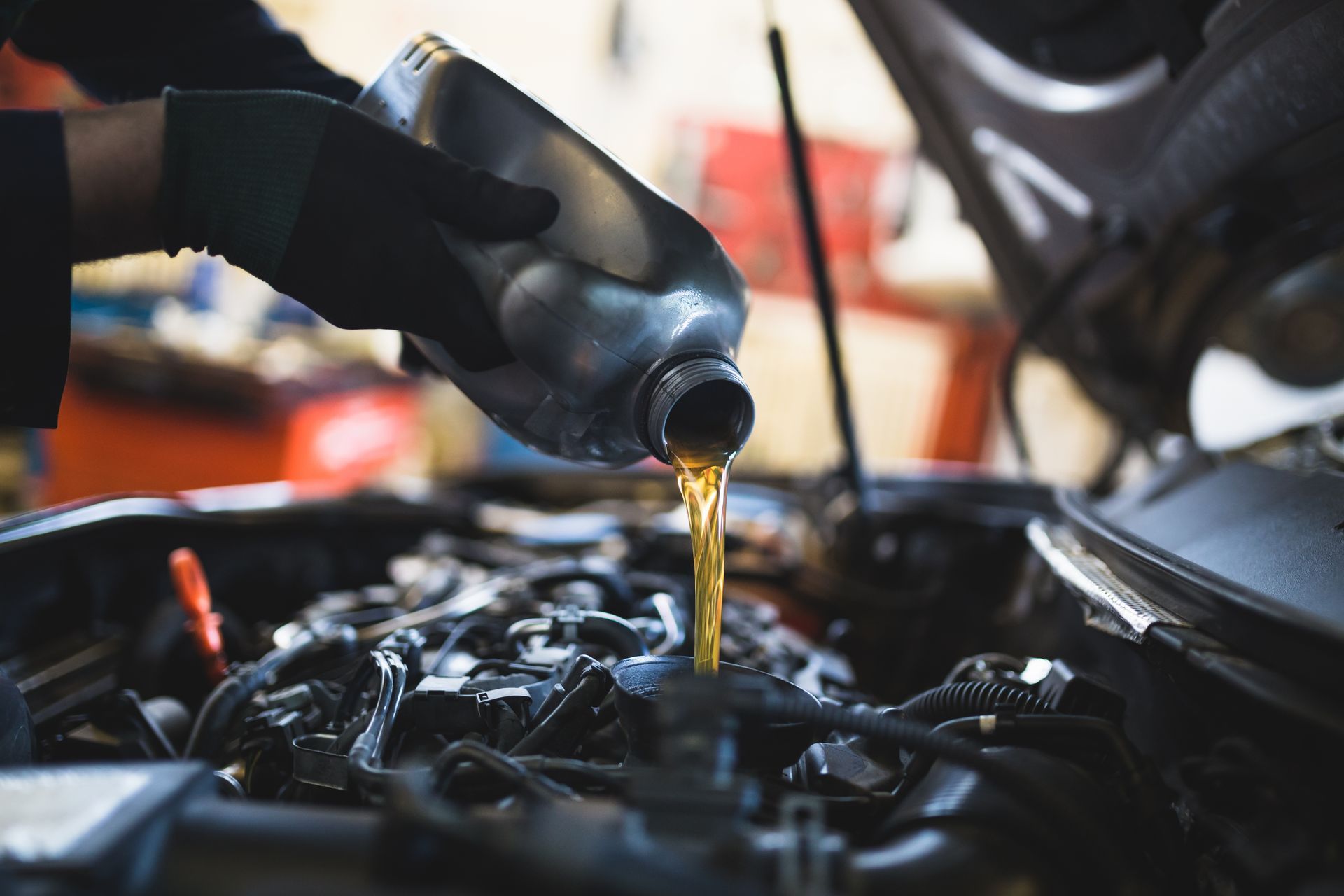
You don't need to empty an oil bottle just because the engine needs a top-off. The required amount may be much smaller than the amount left in the container. Adding the rest turns a low-level correction into an overfill.
The engine needs oil within its specified range. Too little threatens the available supply; too much can interfere with how that supply is handled. The upper limit exists for a reason, and a confirmed overfill should be corrected before the car returns to normal use.
Engine Oil Works Best at the Designed Fill Level
The oil pan stores lubricant for the pump while allowing the engine's rotating parts to move above it as designed. The required quantity accounts for circulation through the engine and filter as well as the amount remaining in the pan. Filling beyond that quantity changes the operating space.
The exact capacity depends on the engine and the service performed. A listed dry-build capacity, an ordinary oil-and-filter change, and a top-off aren't necessarily the same amount. The technician should use the correct service information and verify the final level rather than rely on the bottle size.
An Overfill Can Mix Air Into the Oil
If the oil rises high enough, rotating parts churn through it and create aeration. Oil containing excessive air doesn't behave like the stable lubricant supply the bearings and hydraulic controls expect. Foaming can interfere with pressure and lubrication even though the pan contains more liquid than normal.
The amount needed to reach that condition differs between engines. A reading just over a mark and a substantial overfill aren't the same situation, but neither justifies inventing a safe extra allowance. Confirm the reading, identify the amount involved, and restore the level to the manufacturer's range.
Excess Oil May Reach the Intake Through Ventilation
Crankcase ventilation handles gases produced inside the engine. An excessive oil level can increase oil carryover through that route, depending on the design and operating conditions. The engine may then smoke, run roughly, or foul parts in the intake or combustion area.
Those symptoms require more than draining a random amount and hoping the smoke clears. The oil level, ventilation route, and engine behavior need review. If the engine suddenly runs abnormally after a large top-off, stop and discuss the situation before another start. Keep a record of what was added and how much.
Too Little Oil Creates a Different Lubrication Risk
Low level reduces the quantity available to circulate and carry heat away. Severe loss may uncover the pickup during operation and interrupt the supply to bearings and other parts. That can cause wear quickly, particularly when load and temperature are high.
An oil-pressure warning while the engine is running requires a safe stop and shutdown. It isn't the same as a routine service reminder. Even a correct level doesn't mean the oil pressure is healthy, so don't keep driving just because the dipstick still shows oil after the warning appears.
Check the Level Correctly Before Adding More
Use the owner's manual's checking procedure. The vehicle may need level ground, a defined temperature, and a waiting period after shutdown. Oil smeared along the dipstick can be misleading, while an electronic display may need specific operating conditions before it gives a valid reading.
For a top-off, add a measured amount of the correct oil and recheck as directed. Don't add more each time an electronic display is temporarily unavailable. If the readings remain uncertain, have the level verified. Aim for the specified quantity, not to make the display look reassuring by repeatedly pouring more in.
A Level That Rises Without Topping Off Needs Investigation
Fuel or coolant entering the crankcase can increase the apparent oil quantity. That is a contamination problem as well as a level problem. A rising reading accompanied by fuel odor, coolant loss, unusual appearance, or poor running needs its source checked.
Simply removing enough to return the dipstick to its mark leaves the contaminant and the fault in place. The next steps may involve fuel-delivery, cooling, or internal engine checks depending on the evidence. Describe whether the level changed immediately after service or gradually while the vehicle was being used.
Correcting an Oil Overfill Starts With the Amount and Symptoms
Bring the oil container or service invoice and explain how far the car was driven afterward. A small confirmed excess without symptoms calls for a different assessment from several extra quarts followed by smoke and rough running. The repair should fit what happened, without assuming every overfill caused permanent damage or that every one is harmless.
Get Oil Level and Oil Change Service in Sanford, NC, With Integrated Automotive
Integrated Automotive in Sanford, NC, can verify an uncertain oil level, correct an overfill, and check unexplained oil loss or a rising reading.
Call us to schedule oil service and discuss any symptoms before driving the vehicle farther.