Brake service gets confusing because pads, rotors, and fluid all wear differently. You can have fresh pads with old fluid, good rotors with worn pads, or a brake pedal that feels wrong even though there is still plenty of friction material left.
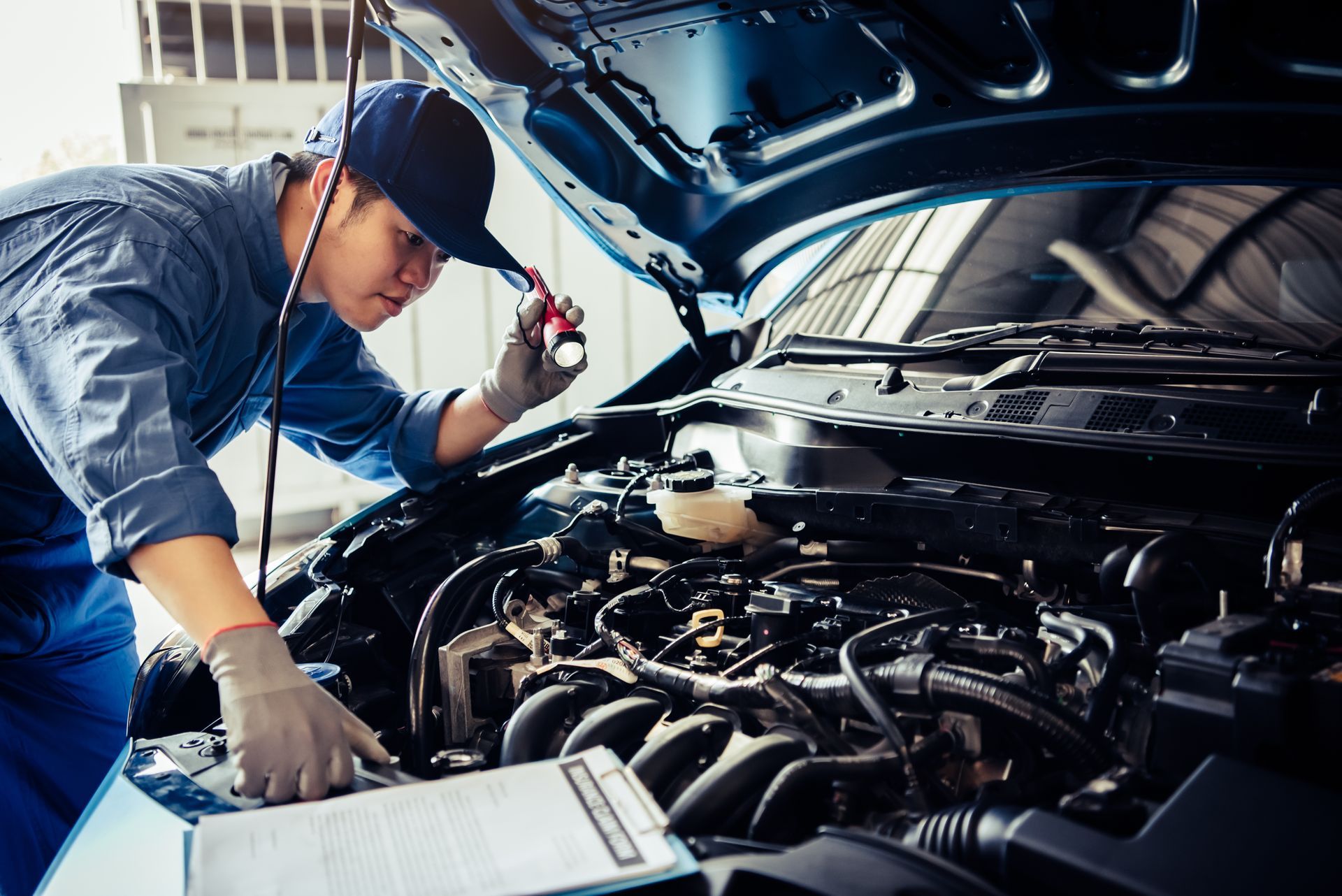
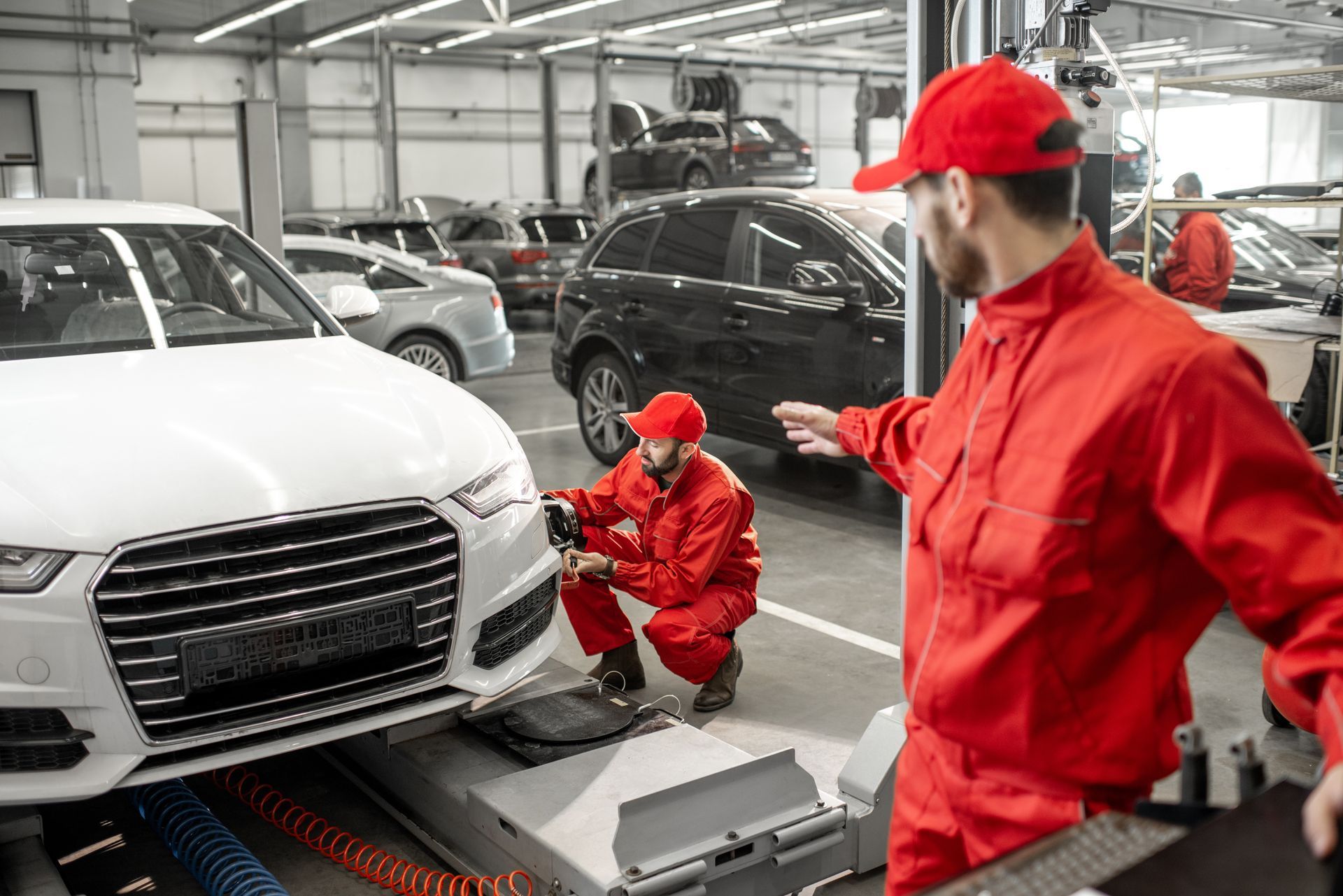
The way the car stops gives us useful clues, but we still want to measure the parts before replacing anything. At our shop, we check pad thickness, rotor condition, brake fluid, pedal feel, and how evenly the brakes work from side to side. That tells us which part actually needs service instead of treating every brake complaint as the same problem.
Brake Pads Need Replacement When the Friction Material Gets Low
Brake pads wear every time they clamp against the rotors. As the friction material gets thinner, the pads move closer to their replacement point.
Some vehicles use mechanical wear indicators that create a high-pitched squeal. Others have electronic sensors that trigger a message on the dashboard. Those warnings are helpful, but we do not wait for noise alone. A pad can wear unevenly because of a sticking caliper or seized slide, leaving one side much thinner than the other.
Signs that deserve a brake check include:
- Squealing that keeps returning
- Grinding during braking
- A brake wear warning
- One wheel producing much more brake dust
- The car pulling while braking
- A hot smell near one wheel
Grinding is especially important because it can mean the friction material is gone and the metal backing plate is contacting the rotor.
Brake Rotors Need More Than a Quick Visual Check
Rotors wear along with the pads, but they do not automatically need replacement every time the pads are changed. We measure rotor thickness and look closely at the braking surface before deciding.
A rotor that is still above its minimum specification and has a good surface may stay in service. A rotor with deep grooves, heavy rust, cracks, heat damage, or excessive thickness variation is a different story.
You might feel rotor problems through the brake pedal or steering wheel. A repeating pulsation during braking often points us toward rotor thickness variation or runout. If the vibration only happens while braking, the rotors move higher on our list than the tires or wheels.
Heat Damage Can Change the Brake Repair
Brakes convert vehicle speed into heat. If a caliper sticks, the vehicle is driven with the brakes dragging, or the pads are pushed far beyond their service life, rotor temperature can get extremely high.
We look for blue or dark heat spots, cracks, uneven pad deposits, and areas where the rotor surface has changed. Heat can also damage the pads and brake hardware.
This is where replacing only the visibly worn part can backfire. If one brake has been running much hotter than the others, we want to know why. A sticking caliper, restricted brake hose, seized slide pin, or damaged hardware needs to be corrected before new pads and rotors go back on.
Brake Fluid Ages Even Though It Does Not Wear Like a Pad
Brake fluid does not become thin because you use the brakes. It ages because it absorbs moisture over time and deals with repeated temperature changes.
As moisture content increases, the fluid's boiling point drops. Under normal driving, you may never notice it, but repeated hard braking can heat the system enough for old fluid to become a problem. Moisture also contributes to corrosion inside hydraulic components.
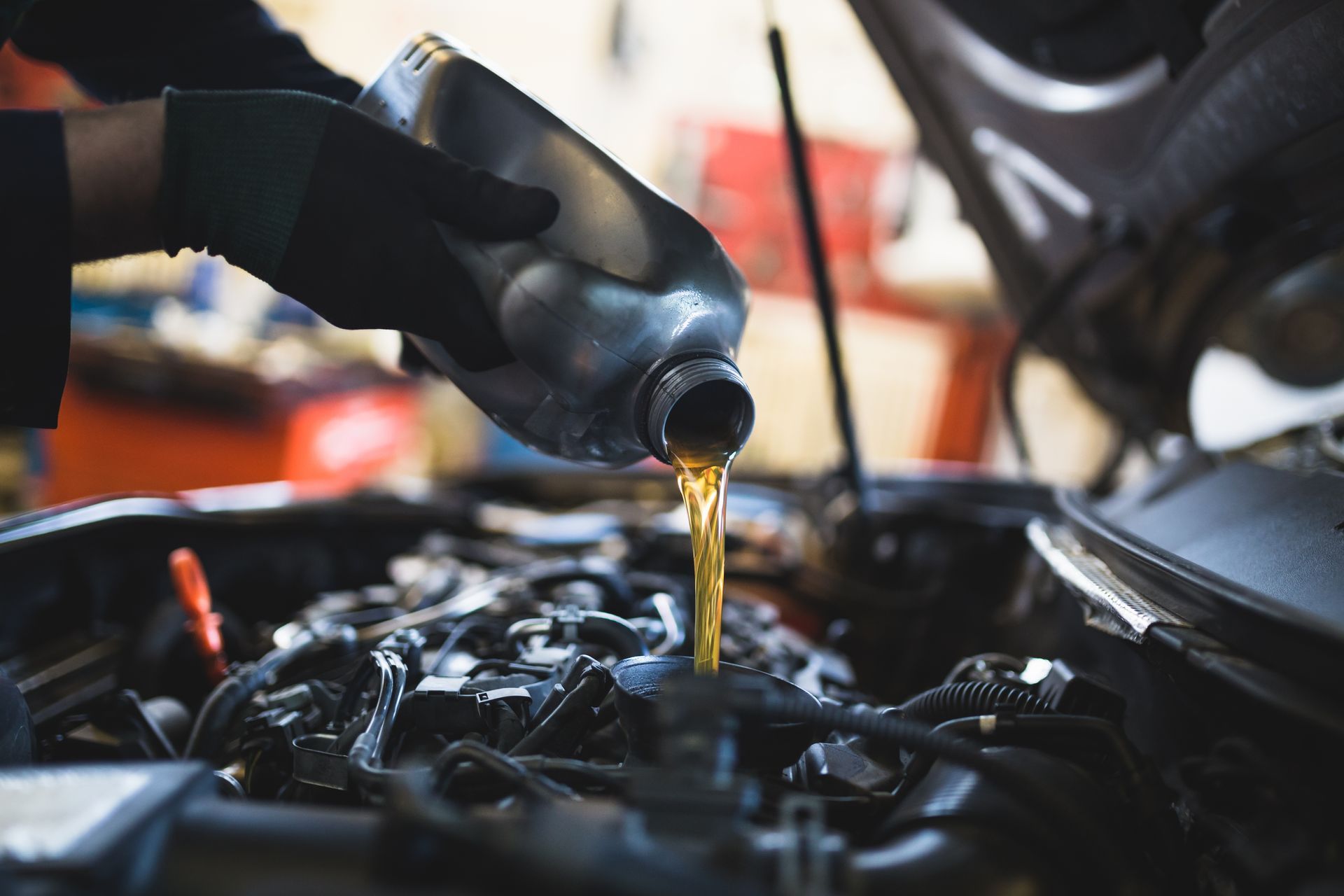
Brake fluid replacement should follow the vehicle manufacturer's recommendation and the condition of the fluid. Some manufacturers specify a time interval because fluid can age even on a low-mileage vehicle.
Pedal Feel Can Point Toward a Hydraulic Problem
Air in the hydraulic system, fluid leaks, failing master cylinder components, or overheated brake fluid can all change pedal feel. If the pedal suddenly drops farther than normal or needs pumping to build pressure, that is not a wait-and-see problem.
During an inspection, we check the fluid level, visible hoses and lines, calipers, wheel cylinders where equipped, and master cylinder operation. If brake fluid is disappearing, we find the leak instead of simply topping off the reservoir.
Pads, Rotors, and Fluid Do Not Always Need Service Together
It is common for one part of the brake system to be due while another still has plenty of life left. Pads are wear items. Rotors are judged by thickness and condition. Brake fluid follows its own service schedule.
Regular maintenance gives us a chance to track all three separately. If the pads are still healthy but the brake fluid is overdue, there is no reason to replace the pads. If the pads are worn but the rotors remain within specification, the repair may not need to include new rotors.
That is why measurements and condition matter more than selling a complete brake package every time.
Get Brake Service In Sanford, NC, With Integrated Automotive
If your brakes are squealing, grinding, vibrating, or the pedal feels different, Integrated Automotive in Sanford, NC, can check the brake pads, rotors, fluid, calipers, and hydraulic system to determine what actually needs service.